
In 2026, APM reviewers continue to make outstanding contributions to the peer review process. They demonstrated professional effort and enthusiasm in their reviews and provided comments that genuinely help the authors to enhance their work.
Hereby, we would like to highlight some of our outstanding reviewers, with a brief interview of their thoughts and insights as a reviewer. Allow us to express our heartfelt gratitude for their tremendous effort and valuable contributions to the scientific process.
Plamena P. Powla, Indiana University Indianapolis, USA
Kim Kuebler, Multiple Chronic Conditions Resource Center, USA
Ming Pan, Windsor Regional Hospital, Canada
Jeremy P. Harris, University of California, USA
Yu Ke, National Cancer Centre, Singapore
Mitchell Wice, Brown University, USA
Plamena P. Powla

Plamena P. Powla is a PhD student in Biostatistics at Indiana University Indianapolis and a T15 predoctoral fellow in Biomedical Informatics. Her research focuses on applying statistical and data science methods to clinical and health systems data to better understand decision-making in high-stakes medical contexts. She is particularly interested in how clinical information, patient characteristics, and care processes shape outcomes in critical care and transplantation. Her current work examines factors influencing family authorization for organ donation after brain death, including how the timing of donation discussions interacts with physiologic indicators of donor stability. Through large-scale registry analyses, she aims to identify modifiable processes that could improve communication with families and increase organ donation. Plamena’s broader research interests lie at the intersection of biostatistics, health data science, and clinical informatics, with a focus on using quantitative methods to inform ethical and evidence-based healthcare decisions. Connect with her on LinkedIn.
Plamena views peer review as how the scientific community collectively takes responsibility for the integrity of its own knowledge. She sees it less as a gatekeeping mechanism than a process of stewardship, where researchers refine and strengthen each other’s work before it becomes part of the shared record. In that sense, every paper is not just an individual contribution but a community‑vetted one. It reflects the idea that scientific knowledge is produced by the community, and ultimately for the community.
Speaking of the importance of reviewer contributions, Plamena describes reviewing as one of the quiet ways researchers take care of their field. It rarely comes with visibility, but it is how the community collectively upholds rigor and helps good ideas reach their best form. Every thoughtful review, she notes, improves not just a single manuscript but the quality of the literature we all rely on. In that sense, it is a form of service to the community, and the progress of science depends on many people being willing to contribute in exactly this way.
Plamena emphasizes that conflict of interest (COI) disclosure is important because transparency is central to maintaining trust within the scientific community. Declaring potential conflicts does not necessarily diminish the value of the work, but it gives readers and reviewers the context they need to interpret it appropriately. Science functions best, she believes, when both the evidence and the circumstances surrounding its production are visible. Clear disclosure helps ensure that the evaluation of research remains grounded in openness and collective accountability.
(by Ziv Zhang, Brad Li)
Kim Kuebler

Kim K. Kuebler is an international thought leader in chronic conditions, pain, and palliative care. She is a Doctor of Nursing Practice and Adult Nurse Practitioner and Clinical Specialist in Oncology, and an inducted Fellow of the American Academy of Nursing. She is a Mayday Pain Fellow from the Department of Neurology at Memorial Sloan Kettering Cancer Center in New York. She has held multiple state and federal appointments including the Michigan Governors Commission on End-of-Life care, four appointments to the Centers for Medicare and Medicaid Evidence Advisory Committee, grant reviewer for the Patient Centered Outcomes Research Institute on comparative effectiveness research on chronic disease, pain and palliative care. She is an award-winning editor and author of 8 textbooks on chronic disease, symptoms, and palliative care. She is an author of multiple peer-review publications and board member of the American Nursing Journal. She is the Editor-in-Chief for the Multiple Chronic Conditions Resource Center. Please visit Dr. Kuebler’s homepage and LinkedIn for more information.
Regarding what reviewers should bear in mind while evaluating manuscripts, Dr. Kuebler stresses three key points: 1) relying on current and accurate evidence to support the content—unless it is historical, references should generally not be older than five years; 2) ensuring that research methods are appropriate, thorough and support the study’s endpoints; and 3) ultilizing psychometrically reliable and valid tools to capture key data.
Dr. Kuebler offers words of encouragement to fellow reviewers who contribute behind the scenes to scientific progress. She notes that having experience provides a strong foundation to offer an expert review. More importantly, she believes that knowledge shared and built upon by others strengthens the field and ensures best evidence, clinical practice and optimizes patient-centered outcomes.
Data sharing is prevalent in scientific writing in recent years. Dr. Kuebler stresses that it is absolutely crucial to share research data - why conduct research if one does not plan to add to the body of knowledge and implement findings to improve clinical care and outcomes? She points out that many initial studies require additional studies to strengthen the data, and this information can be used in evidence-based guidelines or included in systematic reviews and meta-analyses. “Knowledge is power, and the more data we can generate, the better we are able to support best practices,” says she.
(by Ziv Zhang, Brad Li)
Ming Pan
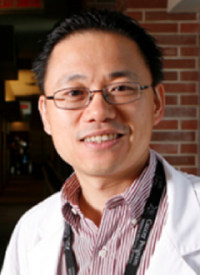
Dr. Ming Pan has been a Radiation Oncologist at Windsor Regional Hospital since 2009. He completed his M.Sc. and M.D. in China, 2-year Radiation Oncology Fellowship in Paris, France and 4-year Residency training at McMaster University in Hamilton, Ontario, Canada. Dr. Pan is an Assistant Professor in the Department of Oncology, Schulich School of Medicine and Dentistry at Western University and an Adjunct Assistant Professor in the Departments of Physics and Biomedical Sciences at the University of Windsor. He has acquired over 25 years of experience practicing radiation oncology in 3 continents. He treats high volume of lung, GU, GI, skin, head and neck malignancies and is continuously involved in clinical research while teaching medical residents and students. He is the Principal Investigator (PI), local PI, or co-investigator on numerous research studies at all times. His current research focuses on AI-assisted radiation treatment planning, SBRT, HSRT and BNCT. Learn more about him here.
Dr. Pan believes that reviewers should always treat the authors as their respectful colleagues while reviewing papers. He asserts that no scientific advancement is possible without valid peer review, offering this as a message of encouragement to fellow reviewers who dedicate themselves to advancing scientific progress behind the scenes.
In addition, Dr. Pan strongly advocates data sharing in scientific writing, explaining that human knowledge about our world and the universe has been expanding dramatically to such a point that single institution studies can no longer represent the real-world data.
(by Lynette Wan, Brad Li)
Jeremy P. Harris
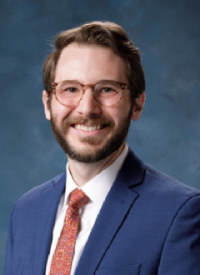
Jeremy P. Harris, M.D., M.Phil., is an Associate Professor and Vice Chair of Clinical Operations in the Department of Radiation Oncology at the University of California, Irvine, where he also serves as Director of Thoracic Radiation Oncology at the Chao Family Comprehensive Cancer Center. Dr. Harris received his MD from Stanford University, where he completed his residency training in radiation oncology, and holds a Master of Philosophy in Chemistry from the University of Cambridge, where he studied as a Churchill Scholar. His clinical and research focus centers on thoracic malignancies and sarcomas, with particular emphasis on clinical trials, combining radiation therapy with novel treatment modalities, and addressing health disparities in cancer care. Connect with him on X @JeremyHarris_MD.
APM: Why do we need peer review?
Dr. Harris: Peer review is the cornerstone of academic progress. For anyone who has done research as part of graduate or post-graduate training, it is almost self-evident why it is critical. For lay people – experimental design and outcome measures can be messy and hard to interpret. There are always different ways to answer a scientific question and measure its outcome, not to mention careers that are on the line for “positive results”. Critiques from uninvolved parties are the best approach to keep the process balanced while making scientific progress.
APM: What are the limitations of the existing peer-review system? What can be done to improve it?
Dr. Harris: The elephant in the room right now is artificial intelligence (AI)/ large language model (LLM). These models really level the playing field when it comes to readability and language discrepancies. Simultaneously, they are excellent at summarizing work and lengthy articles. However, the review process has been holding off their use for reviewers. In my experience, these systems may be great at summarizing work but simply don’t contextualize the article’s significance and methodological rigor for an accurate critique. Still, the summarizing can help save precious time so long as it’s used properly. There is a data sharing problem––but many major Universities utilize secure LLM systems that do not share data outside of the system. For those with such security measures, it seems reasonable that we think about the rules for best use. I could imagine rules such as allowing LLM for summary, grammar check, readability, but not for critique. I could also imagine the publisher itself providing reviewers an LLM summary and readability check. Review is lengthy and challenging, and LLMs can help––we just need to be thoughtful about the rules of engagement.
APM: Would you like to say a few words to encourage other reviewers who have been devoting themselves to advancing scientific progress behind the scene?
Dr. Harris: From one person who wakes up 2 hours before my kids to another, thank you! The pool of academics interested in reviewing articles is small. There is not a lot of credit for those to take up articles for review, but the system stalls without your work. By engaging in this process, you’re joining a comradery who will often disagree or even hold debates on social media for all to see. But we share the principle of academic rigor and goals of improved patient care and knowledge. So the next time you are up at the twilight hours, take a deep breath and a moment to reflect on the past few reviews you have done and the importance for those authors. Again, thank you : )
(by Lynette Wan, Brad Li)
Yu Ke
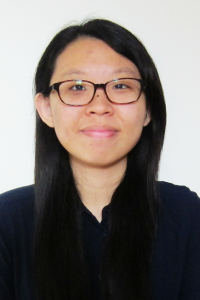
Dr. Yu Ke is a pharmacist by training with expertise in health services research and implementation science. She is currently a Research Fellow in the Division of Supportive and Palliative Care at the National Cancer Centre Singapore. Her work focuses on improving cancer survivorship, supportive care, and palliative care delivery through collaborations with multidisciplinary teams across tertiary and community healthcare settings. Her recent research interests include integrative oncology and patient navigation, particularly in supporting patient access to evidence-informed care modalities and services. Through this work, she aims to strengthen care delivery models and improve outcomes for patients and survivors across different phases of the cancer care continuum.
APM: What role does peer review play in science?
Dr. Ke: Peer review plays an important role in safeguarding the quality of published research. As researchers rely heavily on the literature to identify knowledge gaps and shape new studies, it is important that emerging evidence is scrutinised carefully so that future work is built on genuine gaps rather than misunderstandings or unnecessary duplication. In this sense, peer review is a key mechanism for maintaining the integrity and cumulative value of scientific knowledge. Peer review is also an important developmental exercise, particularly for early-career researchers, as it provides an opportunity to apply critical appraisal skills to new work. Over time, being an active reviewer helps sharpen these skills consistently and offers a valuable shift in perspective from manuscript author to reviewer, which can, in turn, strengthen one’s own writing and manuscript development.
APM: What do you consider as an objective review?
Dr. Ke: An objective review uses neutral, professional language and offers constructive critique rather than emotive judgment. Objectivity comes from clearly identifying the gap between what is expected and what is presented, or highlighting where further clarification is needed, rather than making assumptions about the authors’ intent or the value of the work. I try to maintain objectivity by focusing on the manuscript itself and being mindful not to assume context, especially given cultural, disciplinary, and geographical differences in research practice. Where something is unclear, I would try to ask for clarification or additional context rather than over-interpret what is written.
APM: The burden of being a scientist/doctor is heavy. How do you allocate time to do peer review?
Dr. Ke: I try to be more deliberate about pacing my peer review commitments. Earlier in my career, I took on more reviews as a way to build exposure and strengthen my appraisal skills. Now, I try to limit myself to a manageable frequency, for example, about once a month, and prioritise abstracts or manuscripts that are closely aligned with my expertise or in areas of emerging interest to me. I also find that peer review can provide a useful change of pace from other research tasks, as it engages a different mode of critical thinking and can be intellectually refreshing. Practically, I sometimes use travelling time for an initial read-through to form a general impression, before setting aside more focused time later for a detailed review.
(by Isabelle Wang, Brad Li)
Mitchell Wice

Dr. Mitchell Wice is an Assistant Professor of Medicine at Brown University. He completed his internal medicine residency at Boston University, followed by fellowships in geriatrics and palliative medicine at Mount Sinai Hospital. After fellowship training, he served at Mount Sinai and NYC HHC/Elmhurst Hospital. He currently serves as Chief of Geriatrics and Extended Care at the Providence VA. Previously, he co-directed the Surgical Oncology Co-Management service. He practices at nursing homes, the Geriatrics Primary Care Clinic, and geriatric and palliative medicine services. He also served as interim CMO at PACE-RI and currently works as a hospice medical director. As site director for the Providence VA geriatric and palliative medicine fellowships, he oversees trainee education. His research focuses on broader integration of geriatrics and palliative care, and he collaborates with the Providence VA Center of Innovation in Long Term Services and Supports on research into heart failure and palliative care utilization.
Dr. Wice reckons that a healthy peer-review system encourages collaboration between reviewers and authors, working together to refine manuscripts from initial concept all the way through to publication. He considers academic publishing a collective team effort, with all participants playing an essential role in optimizing the quality of scientific literature.
According to Dr. Wice, reviewers should be honest and provide genuine, constructive criticism. Authors devote extensive time and effort to manuscript preparation, and reviewers may be reluctant to point out flaws. Even so, he notes that authors cannot grow or strengthen their work without clear critiques and actionable suggestions for improvement; simply receiving generic praise is never enough to help researchers advance academically.
“What motivates me to peer review is being able to help other writers improve their research and careers. To me, reviewing is a form of mentoring to others that I would otherwise never get. Seeing one go through the review process and publish a manuscript is a rewarding experience for a mentor,” says Dr. Wice.
(by Lareina Lim, Brad Li)
